


MedSmart
Cardiopulmonary exercise test (CPET) – the ideal tool for a personalized sports routine, but also for the evaluation of complex pathologies
About the cardio-pulmonary system / What is the cardio-pulmonary system
The cardiopulmonary (or cardiorespiratory) system should be viewed as a single entity. While the heart and lungs can be broken down into their components (pulmonary acini, airways for the lungs, and atria/ventricles for the heart), it is essential to view these organs as an integrated unit, each influencing the other. To understand this connection consider the circuit of deoxygenated blood returning from the systemic circulation. This blood enters the right atrium through the vena cava, then passes into the right ventricle and is pumped into the pulmonary arteries leading to the lungs. These arteries branch into capillaries, just as the main bronchi divide into smaller bronchioles. Gas exchange takes place in the alveoli, where residual carbon dioxide is exchanged for fresh oxygen. Oxygenated blood returns to the heart through the pulmonary veins. The left atrium receives this blood and passes it to the left ventricle, which then pumps it through the systemic circulation. The heart and lungs in turn receive oxygenated blood from the bronchial and coronary arteries.
How the body responds to intense physical exercise
Maximum exercise capacity refers to the maximum capacity of the cardiovascular system to deliver oxygen to the locomotor system and the maximum capacity of the skeletal muscles to extract oxygen from the blood. Consequently, exercise tolerance depends on three factors: pulmonary gas exchange, cardiovascular performance and skeletal muscle metabolism.
Oxygen consumption (VQ2) is related to body weight and is expressed in units of ml O2/kg/min. A metabolic equivalent (MET) is equal to oxygen consumption (VQ2) at rest - sitting position and has the value of 3.5 ml/kg/min. VQ2 depends on heart rate, stroke volume and oxygen in the arterial and venous system.
During maximal physical exertion, VQ2 max reflects a person's maximal capacity to take up, transport and use oxygen from the lungs. VQ2 max defines an individual's functional aerobic capacity. VQ2 max has become the most important element in cardiorespiratory testing, especially in gyms, and is the most important measurement during functional exercise testing. In healthy people, after the peak VQ2 max is reached, a plateau appears indicating the level of maximal aerobic effort. This peak represents the maximum level of oxidative metabolism that can be reached for an individual using the majority of large muscle groups. However, in clinical trials, this plateau cannot always be reached, as physical activity is often limited by various symptoms that appear unexpectedly. Consequently, peak VO2 attainable (PVO2) is often used as an estimate of VO2 max.

Cardiopulmonary or cardiorespiratory exercise testing (CPET)
What does CPET mean?
The cardiopulmonary exercise test (CPET) assesses the basic function of this system and its compensatory mechanisms during physiological stress, exemplifying the relationship between structure and function
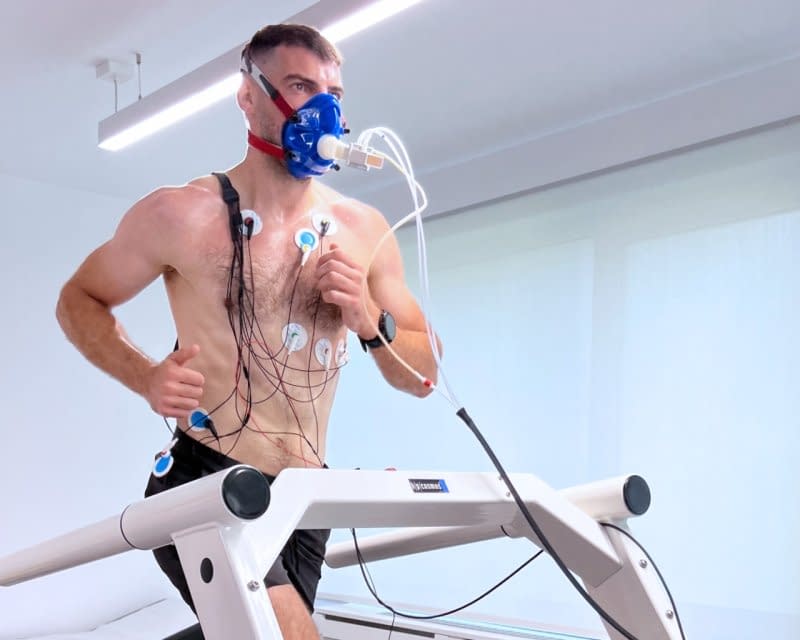
The cardiopulmonary exercise test (CPET) is a non-invasive method that evaluates and integrates the response of the respiratory, cardiovascular (CV) and musculoskeletal systems to physical exercise. It is considered the gold standard in the assessment of cardiorespiratory function and is extremely useful in the differential diagnosis of exercise intolerance. The cardiopulmonary exercise test (CPET) should be seen as more than a diagnostic element, as it has an essential role in risk stratification, prognostication and therapeutic evaluation in different clinical contexts, in the recommendation of physical exercise, both in patients who need cardio recovery -vascular or pulmonary, as well as in healthy athletes aiming to improve their performance.
Why stress testing is rarely used
Despite being recommended by several scientific societies in a wide range of recommendations, the cardiopulmonary exercise test (CPET) is still underutilized for multiple reasons such as:
- its complexity
- lack of trained personnel to interpret it
- lack of awareness of its need
- its availability
- relatively high costs
In what situations is the exercise test recommended?
1. Evaluation of athletes
In asymptomatic athletes, cardiopulmonary exercise testing (CPET) is important for:
- to subclinically detect various heart diseases, especially in performance athletes,
- in the assessment of basic functional capacity,
- in the objectification of sports ability, especially in those who practice recreational sports
- when evaluating performance after different training modalities
In addition, it plays an important role in identifying overloads thus preventing overtraining syndrome.
2. Cardiac Recovery
Important for risk stratification during exercise, for the type of exercise allowed, for the duration of the recommended exercise - the cardiopulmonary exercise test (CPET) being the gold standard for recommending aerobic exercise in various situations encountered in daily practice.
3. Ischemic heart disease
Even though imaging modalities are the standard of diagnosis for ischemic heart disease, cardiopulmonary exercise testing (CPET) provides valuable information about the contribution of ischemia to exercise intolerance. It has an important role in the prognosis of these patients.
4. Cardiomyopathies
Cardiopulmonary exercise testing (CPET) is a safe and useful tool in the evaluation of patients with suspected/confirmed hypertrophic cardiomyopathy (CMH) providing information on symptomatology, disease severity, prognosis and to plan or monitor therapeutic efficacy. Information obtained by cardiopulmonary exercise testing (CPET) can be integrated with data obtained from other investigations for the differential diagnosis between "athlete's heart" and cardiomyopathies. Although the application of cardiopulmonary exercise testing (CPET) in arrhythmogenic cardiomyopathies is rare, it has been shown to be safe and potentially useful for risk stratification when considering advanced therapies (such as cardiac transplantation).
5. Heart failure
Cardiopulmonary exercise testing (CPET) is recommended as part of the evaluation for heart transplantation and/or mechanical circulatory support with a class I indication.
Two other recommendations would be:
- Optimizing effort capacity in rehabilitation (recovery) programs,
- Identifying other overlapping causes that would inexplicably aggravate the patients' symptoms (dyspnea) or the ability to exercise.
6. Various valvulopathies
In valvular disease, cardiopulmonary exercise testing (CPET) has a role in:
- early identification of unreported symptoms,
- identifying the mechanism of dyspnea,
- establishing the prognosis that helps to identify the right time for surgical intervention.
7. Pulmonary hypertension
When evaluating a patient with an established or suspected diagnosis of pulmonary hypertension (PH), the cardiopulmonary exercise test (CPET) can be useful for identifying the pathophysiological mechanism of exercise intolerance, for assessing the severity of PH, for quantifying response to treatment, and for risk stratification of mortality.
8. Congenital heart diseases
The cardiopulmonary exercise test (CPET) is safe to be performed in a wide spectrum of congenital heart diseases, not only for risk stratification, but also for the decision of percutaneous or surgical intervention, as well as the recommendation of physical exercises and training.
9. Dyspnea of unknown cause
Dyspnea felt during physical exertion or in daily activities can be an early symptom for various cardio-pulmonary or neuromuscular diseases, which could implicitly lead to self-limitation of activity, resulting in muscle deconditioning and decreased quality of life. Dyspnea is a predictor of quality of life, exercise tolerance and predictor of mortality in several pathologies (it is superior to FEV1 in COPD and superior to angina pectoris in ischemic heart disease).
10. Various lung diseases
Cardiopulmonary exercise testing (CPET) is extremely useful in evaluating patients with lung disease:
- evaluates the capacity for effort and the level of disability,
- brings useful information to support a diagnosis,
- assess hypoxemia during exercise and the underlying mechanisms, defining therapeutic strategies (such as pulmonary rehabilitation),
- preoperative assessment of the risk of complications in lung surgery and providing information with a prognostic role.

In what situations is exercise testing NOT recommended?
- Acute Coronary Syndrome
- Uncontrolled arrhythmias that generate symptoms or hemodynamic instability
- Pancarditis (endocarditis, myocarditis, pericarditis - active)
- Severe aortic stenosis
- Decompensated heart failure
- Any other acute, decompensated, unstable medical condition that would endanger the patient's life or make the cardiopulmonary exercise test (CPET) irrelevant.
How often adverse reactions occur in the exercise test:
- Incidence of a complication requiring hospitalization ≤2 in 1000.
- Incidence of a major cardiac event < 1.2 per 10,000.
- Mortality incidence of 2-5 per 100,000
What side effects may occur:
- The risk of adverse reactions is the same as the risk assumed for performing light physical exercise.
- The number of patients who develop complications during cardiopulmonary exercise testing (CPET) is low.
- Complications may include abnormal blood pressure variations, syncope, or cardiac arrhythmias.
- Serious complications are extremely rare, such as heart attack or stroke

How it works is quite effortless
Conducting the test
Cardiopulmonary exercise testing (CPET) can be performed on a treadmill or bicycle:
The exercise tape (treadmill) is more often used in cardiology laboratories and offers the advantage of allowing physical exercise that is more representative of the daily activities of most individuals: walking, jogging and running, and thus is often well tolerated by most patients. This type of effort also involves the upper body muscles, due to the global nature of the movement; the effect of this is that VO2 max can often be 5%-10% higher than on a cycling cardiopulmonary exercise test (CPET). This is an obvious advantage in the evaluation of athletes or those patients where determination of VO2 max is desirable. The disadvantage of involving the upper body muscles would be the higher probability of movement artifacts, respectively in the measurement of parameters such as blood pressure, oximetry, ventilation and influencing gas exchange indicators.
The ergometric bicycle (cycle ergometer) is an alternative to the exercise belt. These devices are physically smaller and usually less expensive than most treadmills. Exercise on an ergometric bicycle is well tolerated by most individuals, but may be difficult for those who do not know how to ride a bicycle or for those individuals who have real orthopedic problems or arteriopathy obliterans (these last two limitations also apply to the test on band).
The cycle ergometer is often considered a safer option than the treadmill in patients who have balance or gait problems. On a cycle ergometer, the patient can stop pedaling as soon as they can no longer continue the test, while those exercising on a motorized treadmill must first signal to the operator that they want to stop before the treadmill is slowed down to stop. In the obese patient, the use of the cycle ergometer can offer an advantage. Often obese individuals who are unable to run on a treadmill can perform an exercise test on a bicycle for a sufficient period of time to generate sufficient data for analysis.
The cycle ergometer is particularly useful when elderly or frail patients are being tested and require much gentler increases in exercise intensity than younger or fitter individuals. The obvious disadvantage of the cycle ergometer is that VO2 max will be lower compared to treadmill testing; the advantage is given by the pragmatism with which the test is carried out, the low noise, the ease with which patients / subjects can be monitored - such as BP measurement or ECG, or blood gas sampling or oxygen saturation analysis.
| Bicycle | Treadmill | |
| Maximum oxygen consumption | Inferior | Higher |
| Ability to adapt protocol ramp | Easier | Harder |
| Quantifiable physical effort | Yes | Algorithm based |
| Collecting blood gas | Easier | Harder |
| ECG quality | Higher | Lower |
| Noise and artifacts | Less | More |
| Safety | Safer | Risk of falling down |
| Ease for obese patients | Easier | Harder |
| Subject's training level | Lower | Higher |
| Can be used lying down | Yes | No |
| Better suited for | Patients | Athletes |
| Patients with cardiac pacemaker | Rarely recommended | Recommended |
| Cost | Lower | Higher |
| Appliance size | Smaller | Bigger |
| Ease of movement | Easier | Harder |
In what situations can the test be terminated prematurely?
- angina pectoris:
- Symptomatic: ST segment >2 mm
- Asymptomatic: 3 mm ST-segment elevation
- >1 mm ST segment elevation
- Significant arrhythmias causing symptoms or hemodynamic instability
- Decrease in systolic blood pressure >20 mm Hg from the highest value during the test
- Hypertension >250 mm Hg systolic BP and >120 mm Hg diastolic BP
- Patients with abdominal aortic aneurysms referred for preoperative evaluation >200 mm Hg systolic BP or >110 mm Hg diastolic BP
- Severe desaturation: SpO2 <80% (lower may be acceptable in patients with known underlying lung disease or congenital heart disease
- Loss of movement coordination
- Mental confusion
- Dizziness or lipo/ syncope
Situations related to the patient's condition:
- Dyspnoea
- Leg fatigue.
- Chest pain (angina pectoris).
- Physical pain/discomfort.
- You feel dizzy.
- Discomfort caused by the saddle on the cycle ergometer.
- Palpitations
Situations related to reaching maximum effort:
- VO2 max plateaus on the tracking curve (indicating that the patient has reached their individual VO2 max level).
- Heart rate reaches 90% of individual estimate or heart rate reserve is ≤15 beats/min.
- There is evidence of ventilatory limitation (respiratory reserve <15%, expiratory flow limitation, significant increase in expiratory lung reserve volume).
- mBorg ≥9/10 for leg fatigue or dyspnea.
- Peak blood lactate concentration on exercise ≥8 mmol/L (if measured).
How to prepare for the stress test
- Refrain from exercise on the day of the test and be well rested.
- Eat a light meal or breakfast at least 2 hours before.
- Hydration exclusively through water.
- Avoid caffeine and alcohol before the test.
- Inform the doctor what medication you are taking and decide with him what should not be stopped before the test.
- Bring with you all the medicines you use in case of decompensation or in case of a possible emergency, for example, inhalers or medicine sprays.
- Wear light, comfortable clothing and appropriate shoes for exercise.
- Avoid using body lotion on the upper part of the body as it may affect the recording of the ECG and the placement of the electrodes.
- Refrain from smoking at least 8 hours before the test.
- Avoid wearing nail polish or false nails
The first step to a healthy heart and optimal physical performance! Come to the CorePrime clinic and schedule your cardiopulmonary exercise test (CPET). Throughout the test you will benefit from a careful and personalized monitoring of two professional doctors, a cardiologist and a pulmonologist. For more details and for appointments, call 0743 999 909. If you are curious how the CPET process goes, we are waiting for you on our Instagram page where you can see Sorin Voicescu (link), ATI doctor and athlete and Simona Hapciuc (link), personal trainer, participating in the cardiopulmonary exercise test.
Bibliography
Albouaini K, Egred M, Alahmar A, et al. Cardiopulmonary exercise testing and its application. Postgrad Med J. 2007;83:67---82.
Dennis C. Rehabilitation of patients with coronary artery disease. In: Braunwald E, ed. Heart disease, a textbook of cardiovascular medicine, 4th ed. Philadelphia: Saunders, 1992:1382.
Brooks GA. Anaerobic threshold: review of the concept and directions for future research. Med Sci Sports Exerc 1985;17:22–34.
Balady GJ, Arena R, Sietsema K, et al. Clinician's guide to cardiopulmonary exercise testing in adults: a scientific statement from the American Heart Association. Circulation. 2010;122:191---225.
Guazzi M, Adams V, Conrads V, et al. EACPR/AHA scientific statement: clinical recommendations for cardiopulmonary exercise testing data assessment in specific patient populations. Circulation. 2012;126:2261---74.
Guazzi M, Arena R, Halle M, et al. 2016 focused update: clinical recommendations for cardiopulmonary exercise testing data assessment in specific patient populations. Eur Heart J. 2018;39:1144---61.
Le Meur Y, Hausswirth C, Natta F, et al. A multidisciplinary approach to overreaching detection in endurance trained athletes. J Appl Physiol. 2013;114:411---20.
Levett DZH, Jack S, Swart M, et al. Perioperative cardiopulmonary exercise testing (CPET): consensus clinical guidelines on indications, organization, conduct, and physiological interpretation. Br J Anaesth 2018;120:484–500
Gläser S, Ittermann T, Schäper C, et al. [The study of health in pomerania (SHIP) reference values for cardiopulmonary exercise testing]. Pulmonology 2013;67:58–63.
Edvardsen E, Hansen BH, Holme IM, et al. Reference values for cardiorespiratory response and fitness on the treadmill in a 20- to 85-year-old population. Chest 2013;144:241–8.